
Replica watches, as the name suggests, are timepieces crafted to emulate the aesthetics and functions of genuine luxury brands at a fraction of the cost. For many enthusiasts, they represent a high "price-to-performance" ratio. However, the soul of any watch—replica or genuine—is its movement. It dictates accuracy, stability, and is the ultimate benchmark for quality.
But how did replica movements evolve from crude clones to the high-tech calibers we see today? Let’s break down the three major eras of development.
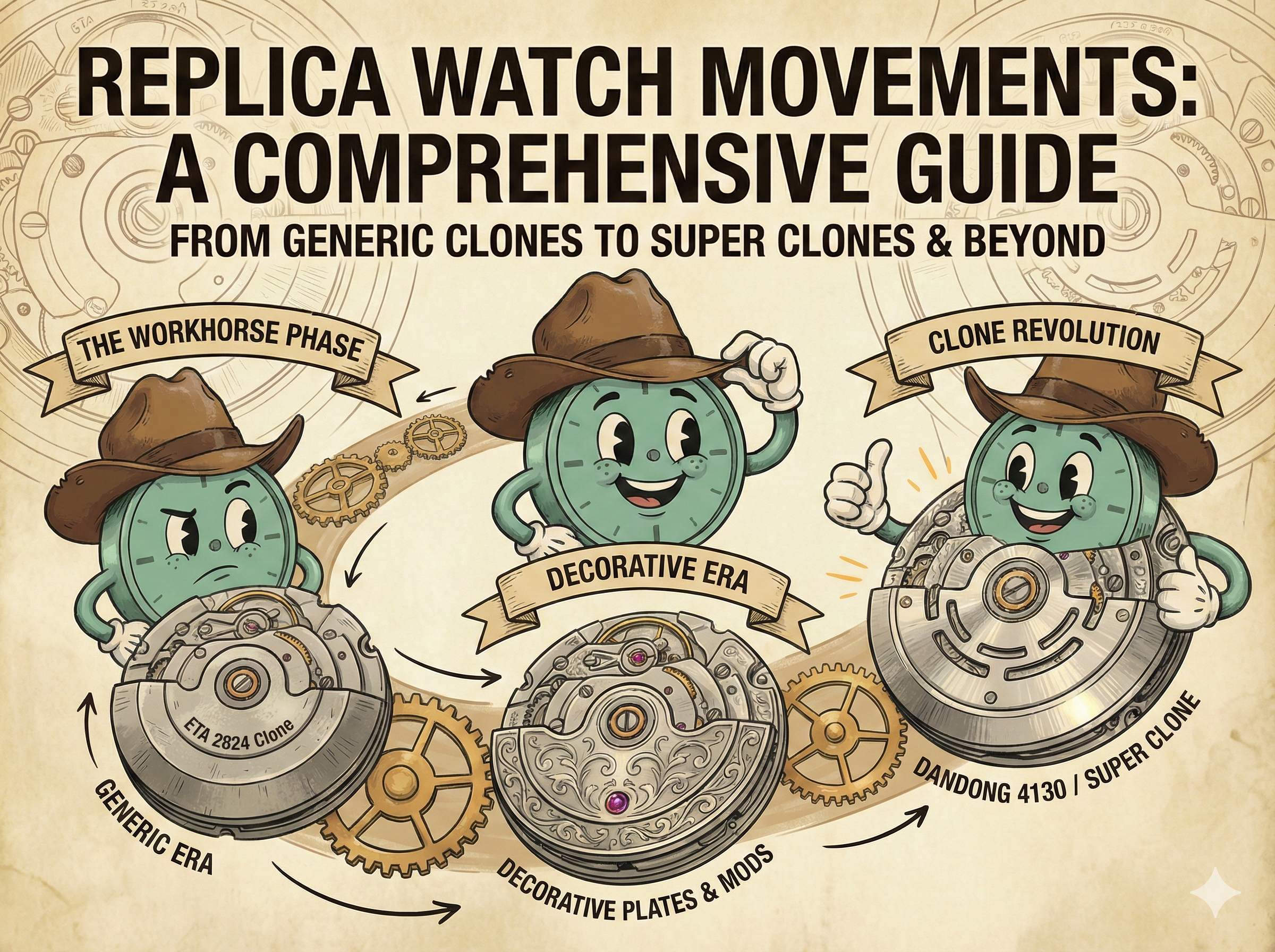
- The Era of Generic Movements (The "Workhorse" Phase)
This is the earliest and most common solution, dating back to the legendary Noob Factory (N-Fac) Submariner V5 and V6 era. During this time, factories relied on off-the-shelf, mass-produced Chinese movements, often referred to as "Standard Movements" (统机).
- Common Calibers: ETA 2824 clones, Seagull 2824, Hangzhou 2836, and Miyota 9015.
- Modifications: Factories would perform basic "decoration," such as engraving the rotor to mimic the genuine look.
- Pros & Cons: These are highly stable and cost-effective. However, they struggle with "visual accuracy." While they pass as "Super Reps" in closed-caseback models (like the Submariner), any exhibition caseback immediately reveals the watch as a replica.
- Verdict: Still widely used today for entry-level reps or solid-caseback models where reliability is prioritized over aesthetics.
- The Era of Decorative Plates and Modified Movements
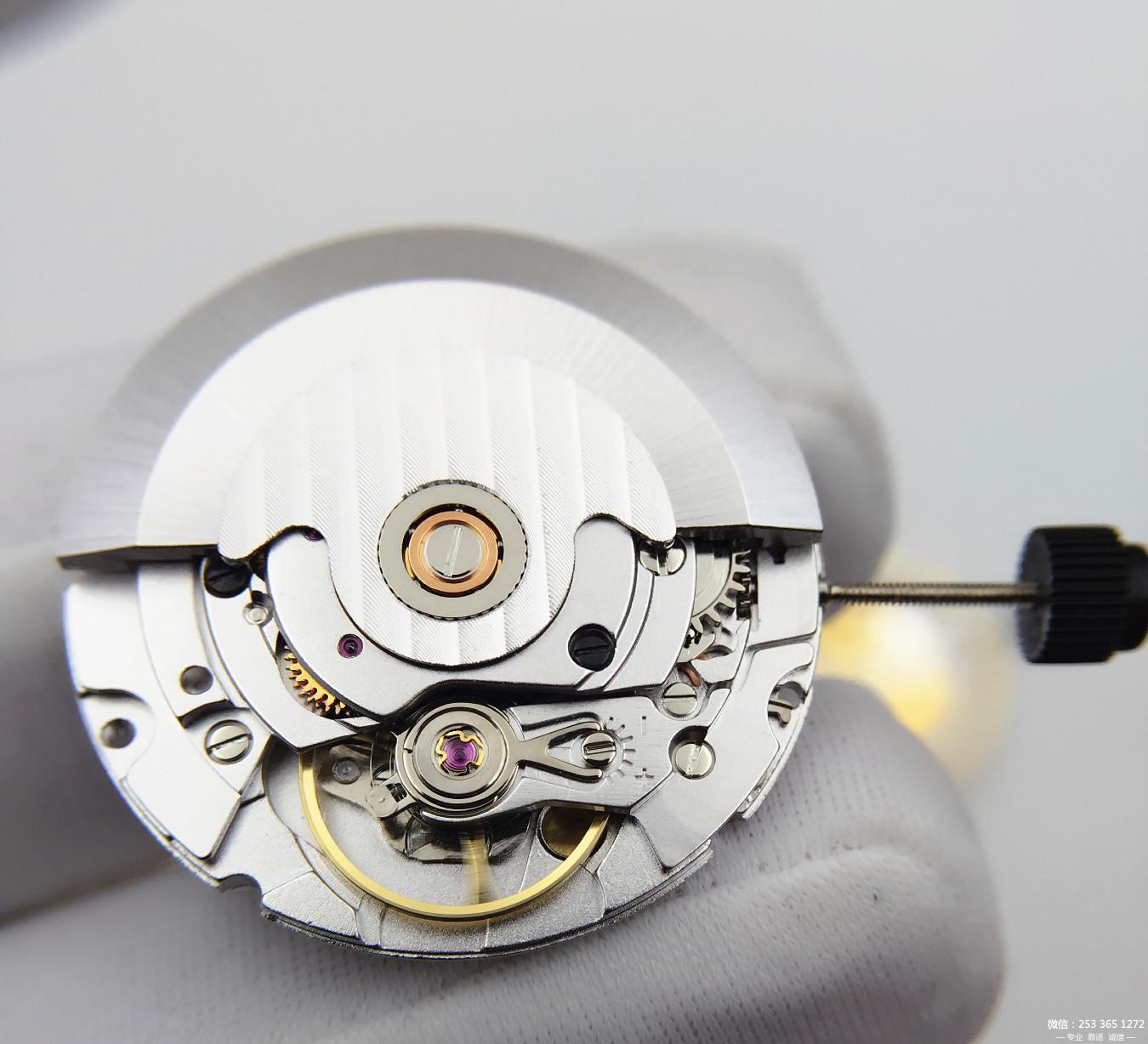
As enthusiasts demanded better visuals for watches with transparent casebacks, the industry introduced Decorative Plates (Decorative Bridges).
- The "Plate" Solution: A thin metal or plastic plate is bolted onto a generic movement (like a Miyota 9015) to mimic the architecture of a Rolex or Patek caliber.
- The Downside: These plates increase the thickness of the watch and often cause "rotor noise." Poorly made plates can lead to loose screws or faux jewels falling into the movement, causing mechanical failure.
- Modified Movements: A step above plates, these involve swapping parts (date wheels, balance wheels, or shock absorbers) on a generic base. An example is the early N-Fac V7 Super 3135.
- Verdict: Best for "budget-conscious" collectors who care about the look through the glass but don't mind the lack of functional complexity.
- The Era of "Clone" (Open-Mold) Movements
This represents the pinnacle of the industry. These are "Super Clones" or "1:1 Open-Mold" movements, where every single component is reverse-engineered to match the genuine caliber's dimensions and functions.
- The Champions: * VS Factory Submariner: Dandong 3135/3235.
- Clean Factory Daytona: Dandong 4130 (The legendary "King of Clones").
- 3K Factory Patek Philippe: Dandong 324 SC.
- APS Factory: Shanghai 3120 (AP) and Dandong 925 (Master Moonphase).
- Pros: Perfect 1:1 aesthetics, functional consistency (like the correct direction for time-setting), and incredible stability with low return rates.
- The Catch: Extremely high R&D costs and limited production. These are reserved for "Top-Tier" replicas.
- Verdict: For the "hardcore" enthusiast who demands nothing less than perfection.
Current Landscape & Future Outlook
Today, the market is a mix: generic movements still dominate the mid-range, while "Super Clones" define the high-end. Interestingly, the trajectory of replica movements mirrors the Chinese automotive industry—moving from copying old tech to independent, high-precision manufacturing.
As CNC technology and horological expertise in China continue to advance, we expect to see "Clone" movements becoming the standard for an even wider range of models.